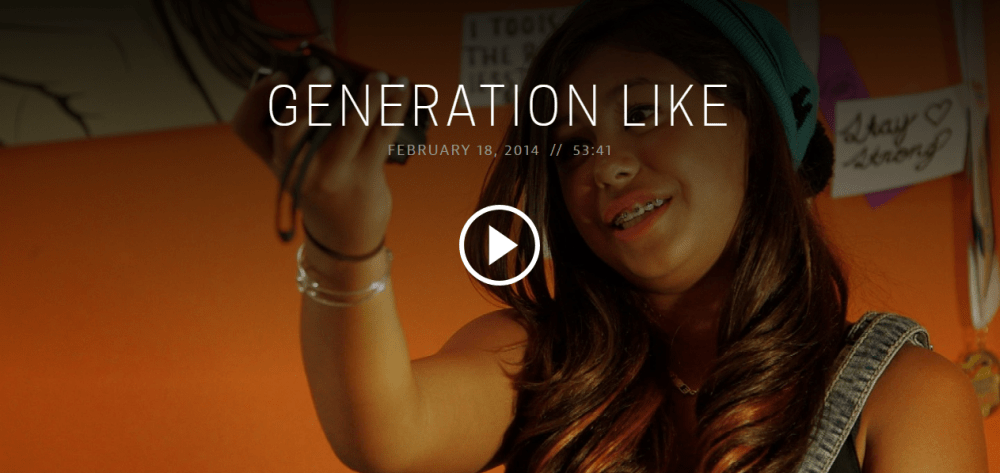
After watching this documentary in class, some classmates felt slightly offended by how naive and gullible this film made users of social media sound; especially younger users that are in love with selfies, likes, and pop culture. The documentary seemed to show businesses using media as a dark manipulating scheme that lures the general public into buying their products without them being none the wiser, which is kind of a stretch to say the least. I think “Hunger Games” girl understands that she is promoting the films for free and doesn’t mind doing so as she is in love with the series. This is a practice that dates well before social media, as it isn’t much different from someone in the 80’s buying a tshirt of their favorite band – which is also free advertising for the group. There’s no question that businesses are benefiting from this newer form of socializing, but it doesn’t necessarily make them bad businesses for taking advantage of this new way of marketing. “Hunger Games” girl is benefiting just as much as they are as she is able to show her loving devotion to the series through the bonuses she earns from sharing. People have always liked to show their hobbies as it helps other people to understand them better, so users of social media don’t mind sharing a movie or band’s promos just like they didn’t mind buying music to share with their friends. Social Media seems to be benefiting everyone in this scenario, which is hardly a problem. To be fair, social media can be misused and can also be hard for people to understand who haven’t gotten fully on board with social media yet; this may have been the case with the creator of this documentary. That fear of the unknown with technology is a lot like what we have discussed in class earlier in the year and is a normal reaction to something new.
Documentary: Generation Like
 Created by Cleo